On this page 10 sections
In short
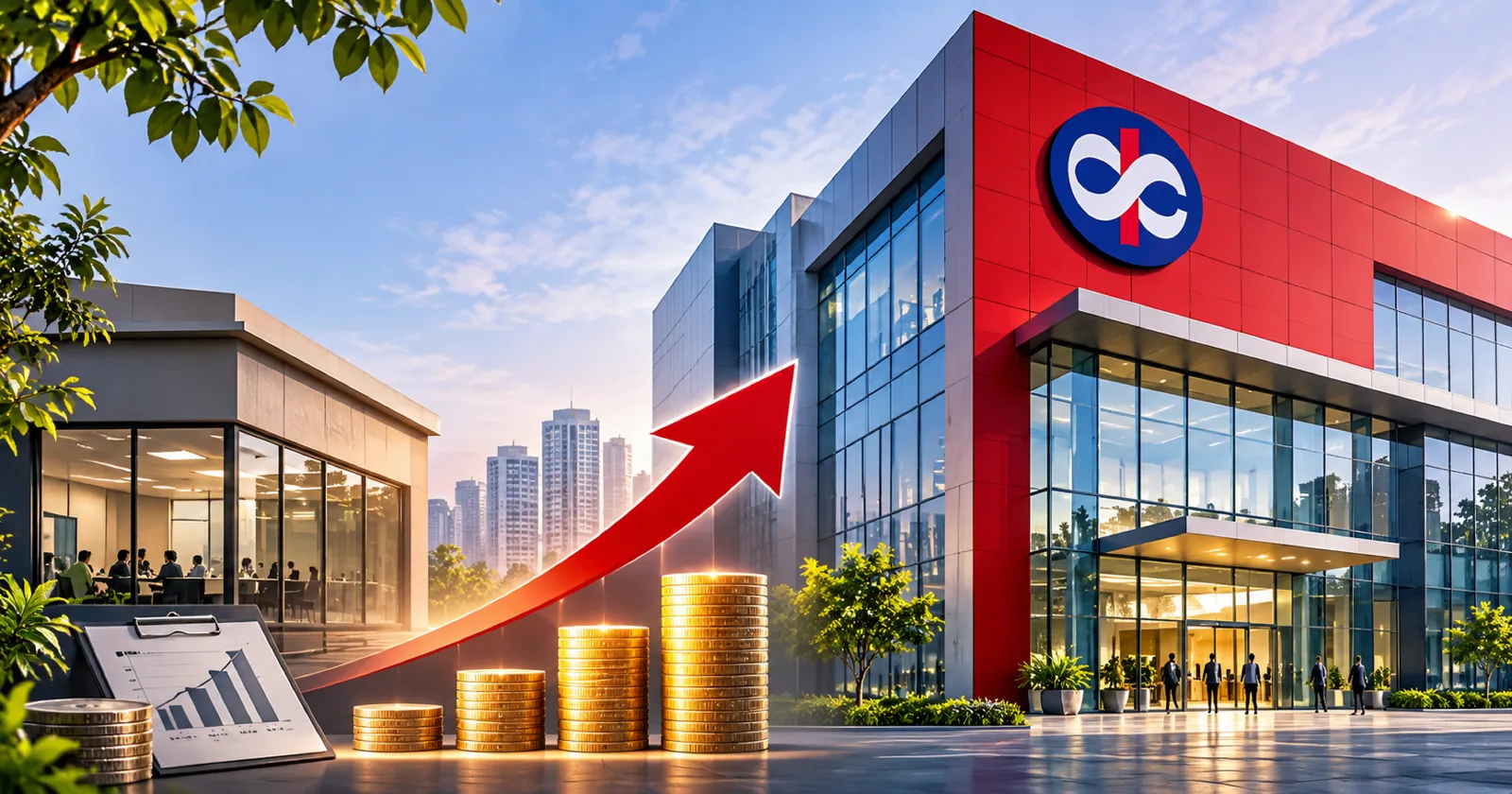
Kotak Mahindra began in 1985 when Uday Kotak started a bill discounting firm in Mumbai, with Anand Mahindra as an early investor. In 2003 it became the first Indian NBFC to convert into a bank. It launched Kotak 811 in 2017 and recovered from 2024 RBI restrictions. In FY26 it reported ₹14,008 crore standalone profit and 5.2 crore customers.
Overview
In 1985 Uday Kotak, a young management graduate from Mumbai, started a small finance company focused on bill discounting, which meant providing short term funds to businesses against their unpaid invoices. Industrialist Anand Mahindra was an early investor, which led to the name Kotak Mahindra. Over the following decades the business expanded into investment banking, broking, asset management, car finance and insurance.
In 2003 Kotak Mahindra Finance received a licence from the Reserve Bank of India to become a bank, the first non banking finance company in India to make that conversion. Today Kotak Mahindra Bank is one of the country's major private sector banks. Its origin story shows how a clear vision and patient execution can turn a niche finance firm into a national institution.
Market Problem
In the mid 1980s Indian businesses struggled to get short term credit. State owned banks charged high interest, processes were slow and smaller companies were often underserved. Uday Kotak noticed that companies paid high rates to borrow while savers earned little on their deposits, and saw an opportunity to connect the two more efficiently.
As the business grew, a different challenge emerged. Non bank finance companies depended on expensive borrowing and could not take low cost savings deposits from the public. To compete with banks over the long term, Kotak needed access to cheaper, stable funding. Without a banking licence, it would always be at a cost disadvantage against larger rivals, however good its products were.

Strategy Used
Kotak's early strategy was to find profitable niches that larger institutions overlooked, starting with bill discounting and later moving into car finance, investment banking and broking. Each new business built expertise and relationships that supported the next.
Converting into a bank in 2003 was the defining strategic move. It allowed Kotak to collect savings and current account deposits and lend at lower cost, while keeping its strengths in capital markets and wealth management. The group expanded through organic growth and acquisitions, including the merger with ING Vysya Bank in 2015, which added branches and customers in southern India. In 2017 it launched Kotak 811, a digital account that customers could open online. The name referred to 8 November 2016, the date of India's demonetisation announcement, which pushed millions of people towards digital payments.
Execution Breakdown
Kotak built a reputation for conservative risk management and a strong balance sheet, which helped it through economic downturns. Kotak 811 brought in large numbers of younger, digital first customers at low cost. In 2023 Uday Kotak stepped down as managing director and chief executive, and Ashok Vaswani became chief executive from January 2024.
The bank faced a significant setback in April 2024, when the Reserve Bank of India barred it from onboarding new customers through online and mobile channels and from issuing new credit cards, citing concerns about its technology systems. Kotak invested in fixing the issues, and the RBI lifted the restrictions in February 2025, after being satisfied with the bank's remedial measures.
Marketing Framework Applied
Kotak's origin story reflects the niche to mainstream growth strategy. It began by serving an underserved segment with a focused offer, built trust and expertise, then expanded into adjacent markets until it could compete with large banks across the board.
Its digital push with Kotak 811 applies the low cost customer acquisition model. A simple, online account with no branch visit lowered the barrier to joining. Once customers were on board, the bank could offer them loans, cards and investments. The 2024 restrictions also show that in regulated industries, technology reliability is part of the brand promise. For smaller businesses handling customer data or payments, dependable web and app development is part of that same promise.

Numbers & Growth Metrics
Kotak Mahindra Bank's results for the financial year ended March 2026:
Standalone profit after tax of ₹14,008 crore and consolidated profit of ₹19,288 crore
5.2 crore customers
Period end deposits of ₹5,72,456 crore and a current and savings account ratio of 43.3%
Net advances of ₹4,96,009 crore
2,276 branches
What Entrepreneurs Can Learn
- Start in a niche you understand. Bill discounting gave Kotak a profitable foothold and deep customer insight.
- Change your structure when it limits growth. Becoming a bank unlocked cheaper funding and new markets.
- Technology is part of trust. The 2024 restrictions showed that reliable systems are essential in regulated businesses.
Actionable Takeaways for SMEs
Lessons to apply in your own growth journey:
Look for a customer need that larger competitors ignore and build your first offer around it
Add services gradually, using skills and relationships from your existing business
Review whether your legal structure, licences or financing limit your next stage of growth
Offer a simple digital way to start working with you, such as online sign up or booking
Invest in reliable systems and backups before scaling, especially if you handle customer money or data
Sources
Want growth like this for your business?
We turn these strategies into a simple plan for your brand: positioning, website, marketing and sales.