On this page 10 sections
In short
State Bank of India, India's largest bank, modernised through YONO, launched in 2017, and by shifting routine transactions to digital channels while keeping its branch network. In the year to March 2026, 98.7% of transactions used alternate channels, YONO had 10.02 crore registered users and SBI reported record net profit of ₹80,032 crore.
Overview
State Bank of India traces its history to the Bank of Calcutta, founded in 1806, and took its current form in 1955. It is India's largest bank by assets, deposits and branches, serving customers in cities, small towns and villages across the country. For decades it was seen as reliable but slow, with long queues and paper heavy processes.
Over the past decade SBI has worked to change that image through a large scale digital transformation. Its YONO app, launched in 2017, sits at the centre of that effort. The bank's experience shows that even the largest and oldest institutions can modernise when technology is tied to customer needs and clear business goals.
Market Problem
SBI's scale was both its strength and its challenge. Serving hundreds of millions of customers through physical branches is expensive, and growing demand placed heavy pressure on staff and infrastructure. Younger customers increasingly expected to bank on their phones, and private banks and fintech companies were setting new standards for convenience.
At the same time, India's digital public infrastructure, including Aadhaar identity, the Unified Payments Interface and widespread smartphone use, was changing how people paid and saved. A bank that did not adapt risked losing younger and more profitable customers, even if its branch network remained unmatched. Fintech apps could offer slick payments and instant credit without carrying the cost of thousands of branches.

Strategy Used
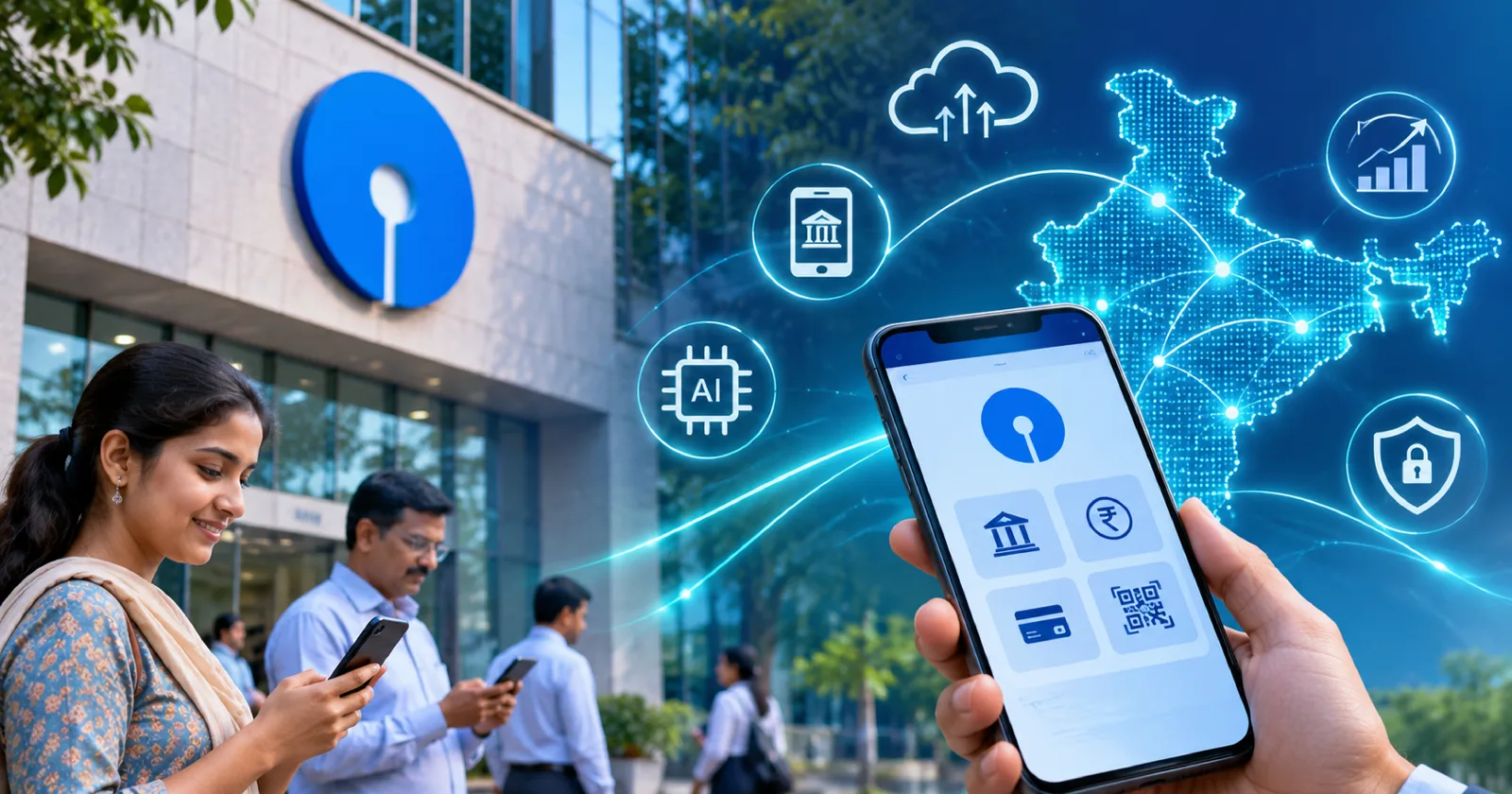
SBI's strategy combined a single digital platform with its existing reach. YONO, which stands for You Only Need One, brought banking, investments, insurance and shopping offers together in one app. Customers could open accounts, apply for loans and manage money without visiting a branch.
The bank also moved routine transactions to alternate channels such as mobile, internet banking, ATMs and banking correspondents, freeing branch staff to focus on advice and sales. It used data from its large customer base to offer pre approved loans digitally, turning its scale into an advantage in credit decisions.
Crucially, SBI did not treat digital as a separate project run by a small team. It made adoption a goal for the whole organisation, setting targets for branches and measuring how many customers moved to digital channels. That turned thousands of branch employees into ambassadors for the app rather than people who felt threatened by it.
Execution Breakdown
SBI rolled out YONO across its network, trained staff to help customers register and promoted the app heavily. Over time it added features for farmers, small businesses and corporate clients. The bank has also been developing a new version of YONO to improve speed and user experience.
The results show in how customers bank. In the financial year ended March 2026, 98.7% of SBI's transactions took place through alternate channels rather than branches, according to its analyst presentation. YONO had more than 10 crore registered users. Digital adoption has helped the bank handle growth in business without a matching rise in costs, contributing to record annual profit. It also gives SBI richer data on customer behaviour, which improves risk assessment and helps the bank design better products.
Marketing Framework Applied
SBI's transformation follows the omnichannel model, where customers can move between branch, app, ATM and agent while receiving a consistent service. It does not replace branches but makes them part of a wider system.
It also applies the technology adoption life cycle. Early adopters embraced YONO quickly, while the bank used its branch staff to help the early and late majority, including older and rural customers, make the switch. Pre approved digital loans created a strong reason to adopt the app, which is a key principle of encouraging new behaviour: give people a clear benefit for changing. Businesses planning their own customer app or portal can apply the same principle when they plan web and app development.

Numbers & Growth Metrics
State Bank of India's results for the financial year ended March 2026, from its analyst presentation:
Net profit of ₹80,032 crore, up 12.88%
Total deposits of ₹59,75,642 crore
Gross advances of ₹49,32,627 crore
10.02 crore registered YONO users
98.7% of transactions through alternate channels
What Entrepreneurs Can Learn
- Digital works best when it builds on your strengths. SBI combined its app with its branch network and customer data.
- Give customers a reason to switch. Pre approved digital loans made YONO immediately useful.
- Free your people for higher value work. Moving routine tasks online let staff focus on advice and sales.
Actionable Takeaways for SMEs
Apply SBI's digital lessons to your business:
Move repetitive tasks such as bookings, payments and status updates online
Offer customers a clear incentive, such as a discount or faster service, for using your digital channel
Train staff to help customers adopt digital tools rather than seeing them as a threat
Use customer history to make personalised offers, such as repeat orders or credit terms
Keep a human option available for customers who need help or prefer personal service
Sources
Want growth like this for your business?
We turn these strategies into a simple plan for your brand: positioning, website, marketing and sales.