On this page 10 sections
In short
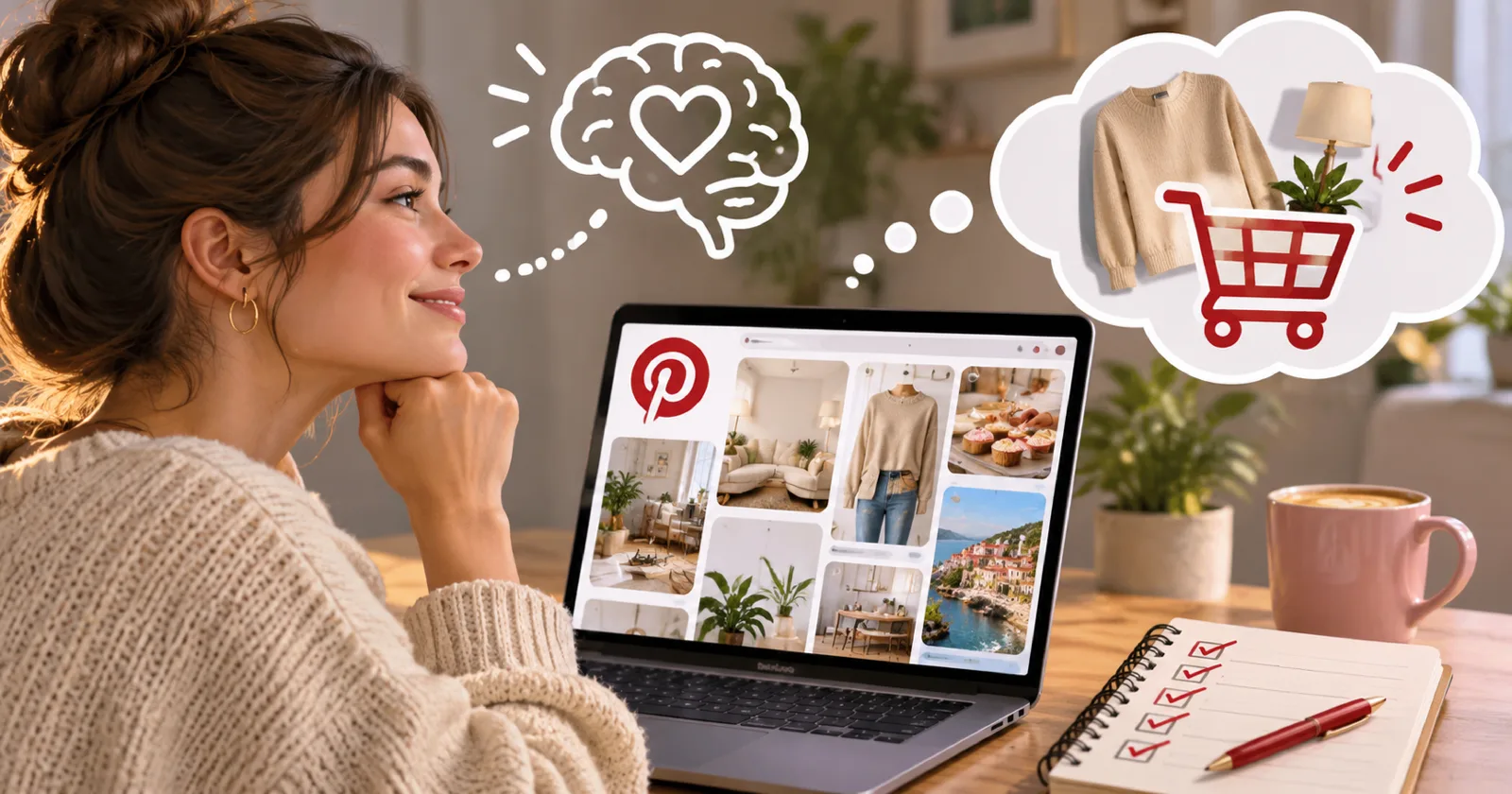
Pinterest, launched in 2010, is built around people planning their future, from meals to homes. That planning mindset puts users early in the buying journey, which attracts advertisers. Under CEO Bill Ready it made pins shoppable. In 2025 it reported $4.22 billion revenue and a record 619 million monthly active users.
Overview
Pinterest launched in 2010, founded by Ben Silbermann, Evan Sharp and Paul Sciarra. Its first idea was simple: let people collect images they love on virtual pinboards, the way earlier generations clipped pages from magazines. That small behaviour turned out to reveal something valuable about human psychology. People were not just browsing. They were planning their future lives, from tonight's dinner to next year's kitchen renovation.
Pinterest listed on the New York Stock Exchange in April 2019. In 2022 Bill Ready, a former Google and PayPal executive, became chief executive and pushed the platform further towards shopping. Its growth since then shows how a deep understanding of user intent can become a business advantage.
Market Problem
Most social platforms are built around people: following friends, celebrities or creators, and reacting to what they say. That model produces engagement, but it also produces comparison, conflict and content that many advertisers find risky.
Meanwhile, shoppers who wanted inspiration had few good places to look before they knew exactly what to search for. Search engines work well when you know the words. They work less well when you only know the feeling of the room, outfit or holiday you want. Brands struggled to reach people at that early, open minded stage of a purchase. That stage matters because it is where preferences are formed, long before a shopper compares prices or reads reviews for a specific product.

Strategy Used
Pinterest built itself around ideas rather than people. Users save pins to boards for projects, and the system learns from those saves to suggest more. Because the focus is on the user's own plans, the experience feels personal and forward looking rather than social and competitive.
The company leaned into this difference. It positioned Pinterest as a positive place online and introduced policies limiting certain kinds of harmful content and political advertising. Under Ready, it made more pins shoppable, linking images directly to products and retailers, and partnered with other ad platforms to bring more product inventory onto Pinterest.
The company also made the platform more personal. Recommendations draw on what each user saves, searches and clicks, so two people opening the app on the same day see very different ideas. That personalisation makes Pinterest feel like a private planning tool rather than a public stage, which is exactly the feeling the brand wants to protect.
Execution Breakdown
Pinterest's product team invested heavily in visual search, allowing users to select part of an image and find similar items. Its recommendation system ranks content by how likely it is to be saved or clicked, which rewards useful ideas over outrage.
On the advertising side, Pinterest promoted the idea that people arrive with commercial intent but before they have chosen a brand. That pitch helped it win budgets from retail, home, beauty and food companies. The shift to shoppable content shortened the path from inspiration to purchase. Growth among younger users, many of whom use the platform for self expression and planning, helped it reach record user numbers.
Marketing Framework Applied
Pinterest maps neatly onto the consumer decision journey: need recognition, information search, evaluation and purchase. Most platforms meet people at awareness or at the point of purchase. Pinterest sits in the information search and evaluation stages, when choices are still open.
It also illustrates future self psychology. People save pins that represent who they hope to become or the life they want to build. Content that connects to those aspirations feels helpful rather than intrusive. For advertisers, that means ads can work as useful ideas instead of interruptions, provided they match the plan the user is building. Retail, home and food businesses can tap the same mindset with helpful visual content as part of their digital marketing.

Numbers & Growth Metrics
Pinterest's full year 2025 results, published in February 2026:
Revenue of $4.22 billion, up 16% year over year
619 million global monthly active users in the fourth quarter, up 12% and a company record
Net income of $417 million, lower than 2024, which had been lifted by a one time tax benefit
Free cash flow of $1.25 billion, up 33%
What Entrepreneurs Can Learn
- Understand why people come to you. Pinterest users arrive to plan, and every product decision supports that intent.
- Positivity can be a positioning strategy. A calmer, safer environment attracted users and advertisers who wanted to avoid conflict.
- Shorten the path from inspiration to action. Shoppable pins turned ideas into purchases with fewer steps.
Actionable Takeaways for SMEs
Use the planning mindset in your own marketing:
Create visual guides, checklists and mood boards that help customers plan before they buy
Publish content for the research stage, such as comparisons and ideas, not just sales offers
Make every inspirational image link directly to a product or booking page
Keep your brand voice positive and helpful to build trust over time
Use seasonal planning moments, such as festivals and weddings, as anchors for campaigns
Sources
Pinterest (Business Wire): Pinterest Announces Fourth Quarter and Full Year 2025 Results (February 2026)
Pinterest Investor Relations: Q4 2025 press release (February 2026)
MarketBeat: Pinterest Q4 earnings call highlights (February 2026)
Want growth like this for your business?
We turn these strategies into a simple plan for your brand: positioning, website, marketing and sales.