On this page 10 sections
In short
Snapchat, founded in 2011 by Evan Spiegel and Bobby Murphy, built a camera first app for private, playful messaging and invented Stories. After Instagram copied Stories, Snap invested in augmented reality and launched Snapchat+. In 2025 it reported $5.93 billion revenue, 474 million daily users and 24 million Snapchat+ subscribers.
Overview
Snapchat started in 2011 as a Stanford project by Evan Spiegel and Bobby Murphy. The idea sounded odd to many investors at the time: photos that disappear after they are viewed. Yet that single choice made the app feel private and playful at a moment when other social networks were turning into permanent public archives. Snap Inc., the company behind the app, went on to introduce Stories, face filters and augmented reality lenses that shaped how a generation communicates.
Snap's story is unusual because so many of its best ideas ended up powering competitors. It is a case study in how to keep innovating when your features are easy to copy, and in how a product company can slowly build a business model around habits it created.
Market Problem
By the early 2010s Facebook had become the place where parents, teachers and employers could see everything. Young people felt pressure to post only polished, permanent moments. Sharing a silly photo carried social risk because it stayed online forever and could be screenshotted, judged and shared out of context.
There was no mainstream app that treated everyday, casual communication as something temporary. Text messaging was private but not visual, and public feeds were visual but not private. Snapchat saw a gap between those two worlds and built a product designed for close friends rather than large audiences.

Strategy Used
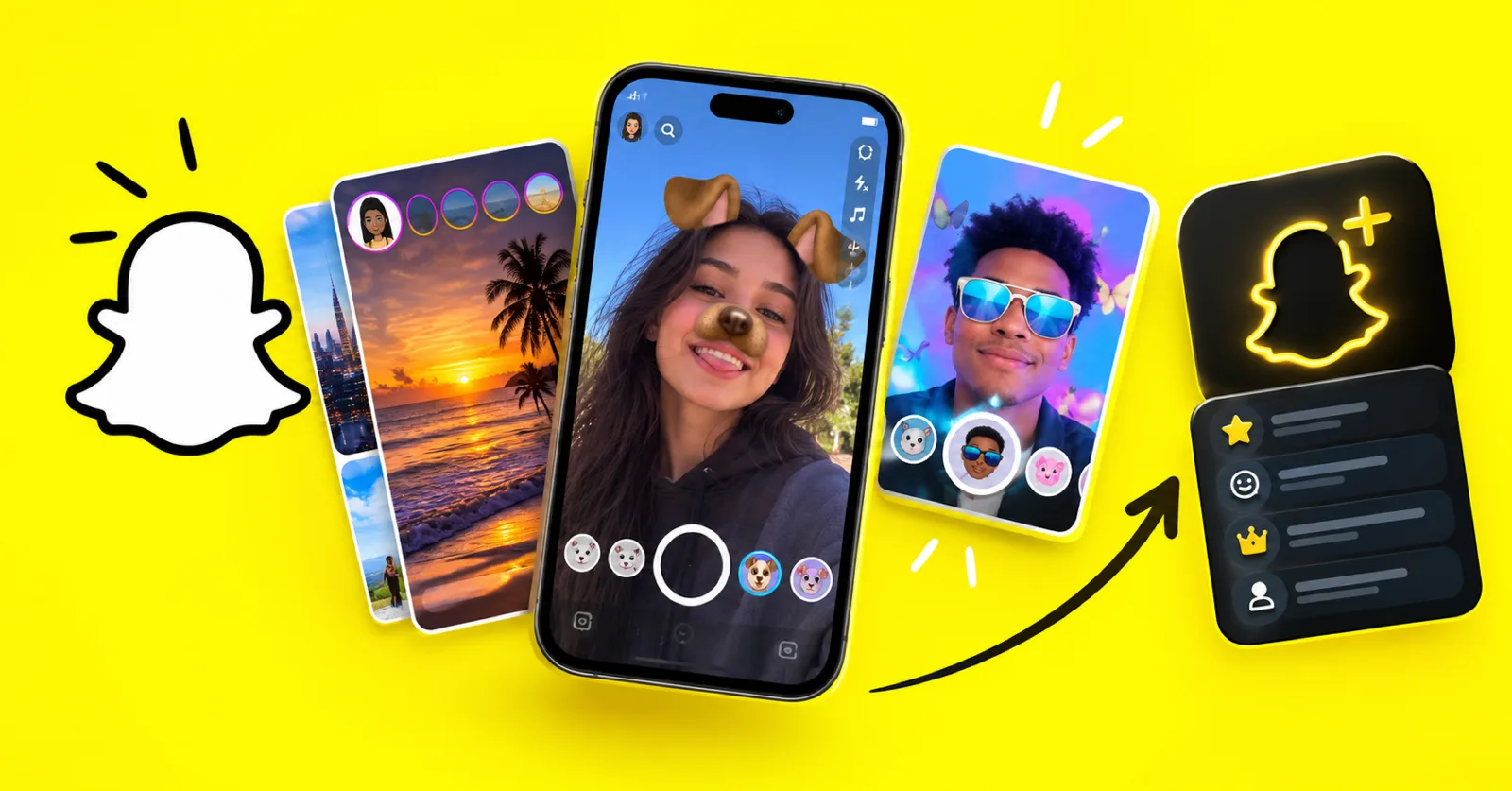
Snap described itself as a camera company. Instead of opening on a feed, the app opens straight to the camera, which makes creating content the default action and keeps the focus on talking with friends rather than scrolling through strangers. Disappearing messages lowered the pressure to be perfect.
In 2013 Snap launched Stories, a sequence of photos and videos that vanish after 24 hours. Later came lenses that used the phone camera to place animations on faces and surroundings, an early mass market form of augmented reality. Each feature reinforced the same promise: playful, private, visual communication with people you know. In 2022 the company added Snapchat+, a paid subscription that gives fans early access to experimental features.
Execution Breakdown
Snap's execution has been a mix of bold bets and hard lessons. It reportedly turned down an acquisition offer from Facebook in 2013 and listed on the New York Stock Exchange in March 2017. In 2016 Instagram launched its own version of Stories, which grew quickly and slowed Snapchat's user growth for a period.
Snap responded by investing in areas that were harder to copy, especially augmented reality. It opened tools that let outside creators build lenses and invested in hardware, starting with Spectacles camera glasses. It also redesigned its advertising system to rely less on personal data after Apple's privacy changes in 2021 made targeting harder across the industry. Snapchat+ gave the company a revenue stream that does not depend on advertising alone.
Marketing Framework Applied
Snapchat is a clear example of the jobs to be done framework. The job users hired it for was not broadcasting but staying close to friends through quick, low pressure visual messages. Its product decisions consistently served that job.
The company also used habit formation. Streaks, which count consecutive days of messaging between two friends, gave users a reason to open the app daily. In positioning terms, Snap has always placed itself against the public, performance driven feed. Being different from Facebook and Instagram is its brand, and that difference is what keeps its younger audience loyal. Brands trying to reach the same audience usually need playful, camera friendly design and video rather than polished corporate assets.

Numbers & Growth Metrics
Snap's full year 2025 results, published in February 2026, show steady growth with improving cash generation:
Revenue of $5.93 billion, up 11% from $5.36 billion in 2024
Net loss narrowed to $460 million from $698 million
Free cash flow of $437 million, roughly double the previous year
474 million daily active users and 946 million monthly active users in the fourth quarter
24 million Snapchat+ subscribers, up 71% year over year
What Entrepreneurs Can Learn
- Design for a specific feeling. Snapchat succeeded because it made sharing feel light and private, not because it had more features than rivals.
- Being copied is a signal, not the end. When Instagram copied Stories, Snap shifted investment to augmented reality, where its lead was deeper.
- Add a second revenue stream from your biggest fans. Snapchat+ turned loyal users into paying customers without changing the free product.
Actionable Takeaways for SMEs
Turn Snap's lessons into practical moves for your business:
Define the emotion customers should feel when they use your product, and test every new feature against it
Make the most valuable action the easiest one, the way Snapchat opens straight to the camera
Build a light habit loop, such as a weekly offer or loyalty streak, that brings people back regularly
Expect competitors to copy your best idea and keep a second advantage in development
Offer a paid premium tier for your most engaged customers alongside your standard offer
Sources
Snap Inc. Investor Relations: Snap Inc. Announces Fourth Quarter and Full Year 2025 Financial Results (February 2026)
Business Wire: Snap Inc. fourth quarter and full year 2025 results (February 2026)
Alpha Spread: Snap Reports Higher Profits and Revenue Growth Despite Falling User Numbers (February 2026)
Want growth like this for your business?
We turn these strategies into a simple plan for your brand: positioning, website, marketing and sales.